
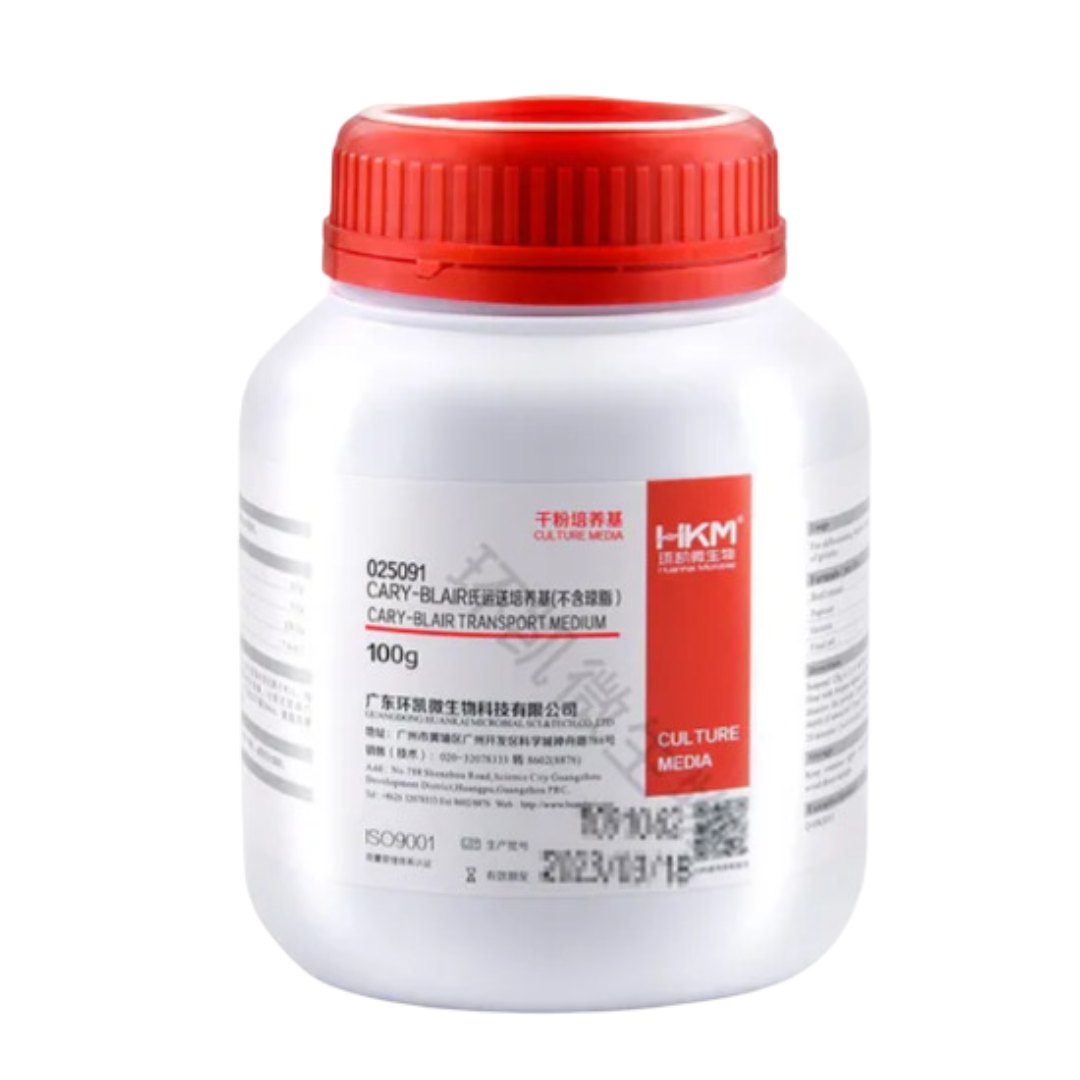
Transport Medium Without Agar
This Transport Medium Without Agar is used for the collection, transport, and preservation of clinical specimens, primarily fecal or rectal swab samples, containing enteric pathogens. The absence of agar means it is a liquid medium (or the powder form has a specific instruction to not add agar), rather than the typical semi-solid gel consistency.
Key Purpose
The primary function is to maintain the viability of pathogenic bacteria from the point of collection to the diagnostic laboratory without allowing for significant multiplication of the organisms or overgrowth of commensal flora. This ensures that the lab results accurately reflect the original concentration of pathogens in the sample.
It is particularly effective for preserving the following types of bacteria:
- Salmonella spp.
- Shigella spp.
- Vibrio cholerae (due to the high alkaline pH of the medium)
- Campylobacter spp.
- Yersinia pestis
How it Works
The medium’s formulation creates an environment that is optimized for survival, not growth:
- Low Nutrient Content: Minimal nutrients are included to prevent bacteria from growing or multiplying.
- High Alkaline pH (~8.4): This alkaline environment helps neutralize acidic metabolic byproducts that can rapidly kill sensitive pathogens, such as Vibrio species.
- Sodium Thioglycollate: This acts as a reducing agent, maintaining a low oxidation-reduction potential, which is important for preserving oxygen-sensitive (microaerophilic or anaerobic) organisms like Campylobacter.
- Osmotic Balance: Sodium chloride and calcium chloride provide essential ions to maintain proper osmotic pressure, which helps preserve the integrity of the bacterial cells.
Usage
This medium is essential in public health, clinical microbiology, and food safety applications, especially when there are delays in transporting a sample to a lab.
Related products
Culture Media
Culture Media
Culture Media