
Hematology Analyzer
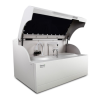
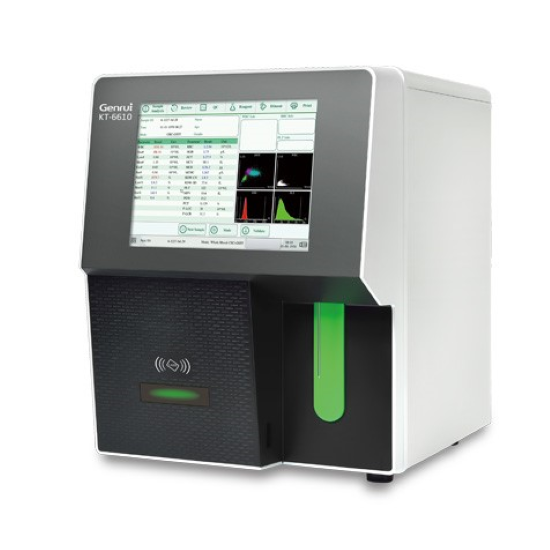
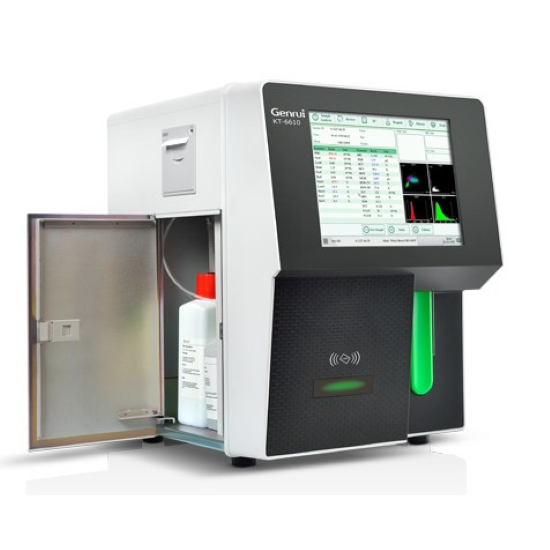
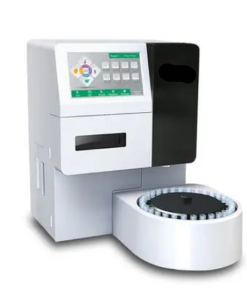
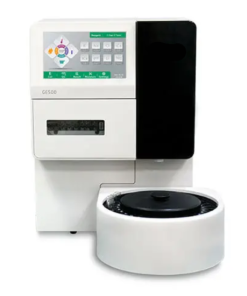
The KT-6610 Hematology Analyzer is a fully automated 5-part differential blood cell counter used in clinical laboratories to perform comprehensive analysis of blood samples. Its main purpose is to provide detailed information about the cellular components of a patient’s blood to aid in the diagnosis and monitoring of various diseases.
Primary Purpose and Uses
KT-6610 is meant to perform a complete blood count (CBC), which is often one of the first tests requested by physicians to assess a patient’s general health status.
Specific uses include:
- Diagnosing Blood Disorders: It helps identify and diagnose hematologic conditions such as anemia, leukemia, and infections by analyzing the size, number, and morphology of blood cells.
- Monitoring Overall Health: Routine CBC tests help healthcare providers determine a patient’s general health and screen for a variety of conditions before symptoms appear.
- Assessing Treatment Response: For patients undergoing treatments like chemotherapy, the analyzer is used to monitor blood cell counts over time and assess how the treatment is affecting the patient’s blood parameters.
- Providing Detailed Analysis: As a 5-part differential analyzer, it can differentiate between all five types of white blood cells (neutrophils, lymphocytes, basophils, eosinophils, and monocytes), providing more in-depth data than a 3-part analyzer.
- Detecting Inflammation/Infection Markers: Newer versions, like the KT-8000P, can also test for C-reactive protein (CRP) and Serum Amyloid A (SAA) from a single blood sample, which aids in the quick, early diagnosis of infections and inflammation.
Measured Parameters
The analyzer measures numerous parameters and provides histograms and scattergrams for accurate interpretation. These include:
- White Blood Cell (WBC) Count and differential percentages
- Red Blood Cell (RBC) Count
- Hemoglobin (HGB) Level
- Hematocrit (HCT) Level
- Platelet (PLT) Count
- Various other indices such as Mean Corpuscular Volume (MCV), Red Cell Distribution Width (RDW), and Plateletcrit (PCT).
KT-6610 uses technologies such as tri-angle laser scattering, flow cytometry, and electrical impedance to perform these measurements with high speed and accuracy.
Related products
Medical Machines
Medical Machines
Medical Machines
Medical Machines
Medical Machines
Medical Machines
Medical Machines
Medical Machines